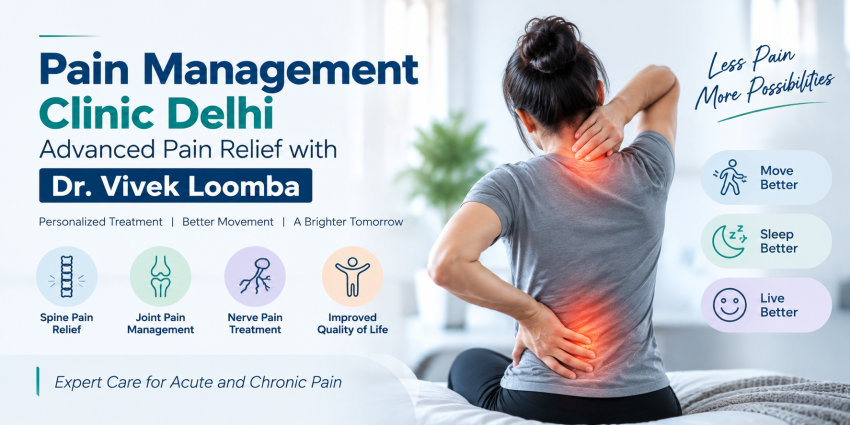
Living with ongoing pain can make simple activities such as walking, working, sleeping, or exercising difficult. While temporary pain often improves with rest and basic treatment, persistent or recurring pain may require specialist attention. Visiting a pain management clinic Delhi can help identify the source of pain and create a treatment plan based on the patient’s individual condition.
Dr. Vivek Loomba provides specialized pain management care in Delhi for people experiencing acute and chronic pain. The aim of pain management is not only to reduce discomfort but also to improve movement, function, and overall quality of life.
What Is a Pain Management Clinic Delhi?
A pain management clinic Delhi focuses on the diagnosis, treatment, and long-term management of different types of pain. Unlike simply taking pain-relieving medicines, specialist pain management involves understanding why the pain is occurring.
A detailed evaluation may include reviewing symptoms, medical history, previous treatments, physical examination, and relevant diagnostic reports. Once the possible source of pain is identified, an appropriate treatment plan can be developed.
Pain management may involve medicines, physiotherapy, lifestyle changes, rehabilitation, or minimally invasive pain-relief procedures depending on the condition.
Conditions Treated at a Pain Management Clinic Delhi
Pain can develop due to problems involving the spine, joints, muscles, or nerves. A pain management clinic Delhi may help patients experiencing conditions such as:
- Chronic back and neck pain
- Sciatica and slipped disc-related pain
- Arthritis and joint pain
- Knee, hip, and shoulder pain
- Neuropathic or nerve pain
- Trigeminal neuralgia
- Complex Regional Pain Syndrome (CRPS)
- Cancer-related pain
- Post-surgical pain
- Persistent musculoskeletal pain
Pain that continues for weeks or months should not always be ignored, especially when it begins affecting mobility, sleep, work, or everyday activities.
How Does a Pain Management Clinic Delhi Treat Chronic Pain?
There is no single treatment that works for every patient. Effective pain management starts with understanding the underlying condition and severity of symptoms.
Depending on the diagnosis, treatment may include medications, physiotherapy, exercise guidance, lifestyle modifications, and targeted pain procedures. Interventional treatments such as nerve blocks, epidural injections, facet joint injections, or radiofrequency procedures may be considered for selected patients.
These procedures are generally recommended only after proper clinical evaluation. The goal is to control pain while helping the patient return to normal activities whenever possible.
Benefits of Choosing Specialist Pain Management
Chronic pain can affect more than the painful area itself. It may reduce physical activity, disturb sleep, affect work performance, and make everyday tasks more challenging.
Specialist pain management focuses on the patient as a whole rather than simply providing temporary pain relief. A personalized approach can help identify pain triggers, improve mobility, reduce discomfort, and support better daily functioning.
For some conditions, minimally invasive pain procedures may also provide an alternative treatment option before major surgery is considered. However, the most suitable approach depends on the individual diagnosis.
Why Consult Dr. Vivek Loomba for Pain Management in Delhi?
Dr. Vivek Loomba is a Pain Management Consultant in New Delhi with more than 23 years of experience. He specializes in the management of acute and chronic pain and provides care for a wide range of painful conditions.
Patients looking for a pain management clinic Delhi can consult Dr. Vivek Loomba for a detailed evaluation and an individualized treatment approach. Treatment is selected according to the cause, severity, duration of pain, medical history, and individual needs of the patient.
Early assessment can be particularly useful when pain is persistent, becoming worse, or interfering with everyday life.
When Should You Visit a Pain Management Clinic Delhi?
Consider consulting a pain specialist when pain continues despite routine treatment, repeatedly returns, limits movement, affects sleep, or interferes with work and normal activities.
You should also seek medical attention promptly if pain is associated with significant weakness, loss of sensation, bladder or bowel problems, fever, major injury, or other unusual symptoms.
Finding the cause of persistent pain is an important first step toward managing it effectively. With appropriate diagnosis and a personalized treatment plan, many patients can work toward better pain control, mobility, and quality of life.
Frequently Asked Questions (FAQs)
Q: What does a pain management clinic do?
A pain management clinic evaluates different types of acute and chronic pain, identifies possible causes, and develops an individualized treatment plan that may include medicines, rehabilitation, physiotherapy, or interventional pain procedures.
Q: When should I visit a pain management clinic Delhi?
You should consider visiting a pain management clinic Delhi when pain persists for several weeks, keeps returning, does not improve with routine treatment, or starts affecting your sleep, mobility, work, or daily activities.
Q: Can chronic pain be treated without surgery?
Many pain conditions can be managed using non-surgical approaches. Depending on the diagnosis, options may include medications, physiotherapy, lifestyle changes, injections, nerve blocks, or other minimally invasive procedures.
Q: What types of pain does Dr. Vivek Loomba treat?
Dr. Vivek Loomba manages acute and chronic pain conditions, including back and neck pain, nerve pain, joint-related pain, cancer pain, and other persistent pain conditions. The appropriate treatment depends on individual assessment.
Q: Are pain management treatments safe?
Pain management procedures are selected according to the patient’s diagnosis, medical history, and overall health. A pain specialist should explain the expected benefits, possible risks, and available alternatives before recommending a procedure.

